Vastu-Compliant Interior Design: Tradition Meets Modern Aesthetics
Vastu principles and contemporary design are more compatible than you think. Here's how we weave ancient wisdom into modern interiors.
Understanding Vastu Shastra in the Modern Context
Vastu Shastra is an ancient Indian science of spatial arrangement that codifies the relationship between built environments and human wellbeing. At its core, Vastu seeks to align buildings with natural forces — the movement of the sun, prevailing winds, magnetic fields — to create spaces that support health, prosperity, and mental clarity.
At Styluxe, we approach Vastu as a consultative framework rather than a rigid rulebook. Many Vastu principles align naturally with modern best practices in architecture and interior design — optimising natural light, ensuring cross-ventilation, placing high-activity spaces in energised zones. Others require careful interpretation when working with fixed structural constraints in existing buildings.
Entry and Main Door Vastu
The main entrance is considered the most significant Vastu element in any home. The north, east, and north-east are the most auspicious directions for main doors. The entry should be well-lit, clutter-free, and welcoming — which aligns perfectly with modern design principles of creating positive first impressions.
Practically, if your apartment's main door faces a less auspicious direction, strategic use of lighting, colour, and threshold materials can address Vastu concerns while enhancing the spatial experience. A well-designed foyer with warm lighting and natural materials creates a positive arrival experience regardless of compass orientation.
Kitchen Vastu: Practical Guidance
Vastu recommends the south-east direction for the kitchen, as it is associated with Agni (the fire element). The cook should ideally face east while cooking. In modern apartment layouts, complete adherence to these guidelines is often structurally impossible — the kitchen location is fixed by the building's structure.
Where flexibility exists, we work with these guidelines. Where it does not, we focus on the elements within our control: the placement of the stove within the kitchen, the positioning of the cooking platform relative to the window, and the colour palette (warm, energising tones for kitchens align with both Vastu guidance and modern kitchen design preferences).
Bedroom Placement and Sleep Quality
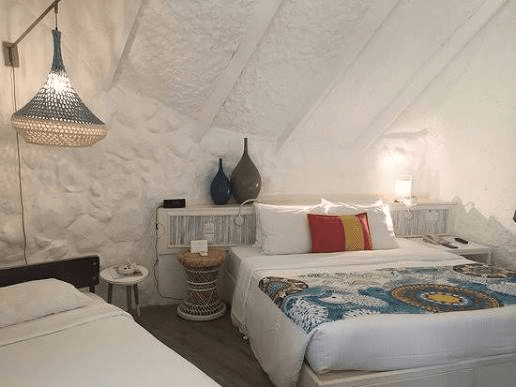
The master bedroom is recommended in the south-west direction, with the head of the bed pointing south or west. This principle has an interesting parallel in modern sleep science — the south-facing sleeping direction aligns the body's magnetic orientation with the Earth's magnetic field, which some researchers associate with improved sleep quality.
Whether or not the magnetic alignment principle has measurable effects, the practice of designing bedrooms as serene, low-stimulus sanctuaries — heavy curtains, limited electronics, cool colours, minimal clutter — is fully supported by sleep research and Vastu guidance simultaneously.
Colour Recommendations and Balancing Tradition with Modern Aesthetics
Vastu associates specific colours with specific directions and functions: yellow and cream for living rooms, green for north-facing spaces, white or cream for the north-east. These palettes are broadly compatible with contemporary neutral interior aesthetics. The challenge arises when clients request bold, dark, or unconventional colours — in these cases, we apply Vastu guidelines as accent and secondary colour guidance rather than primary wall colour requirements, allowing modern design freedom while respecting the underlying principles.
Ready to Transform Your Space?
Get a Free Consultation
Talk to our design team about your project — no obligation, no cost.
Book Consultation

