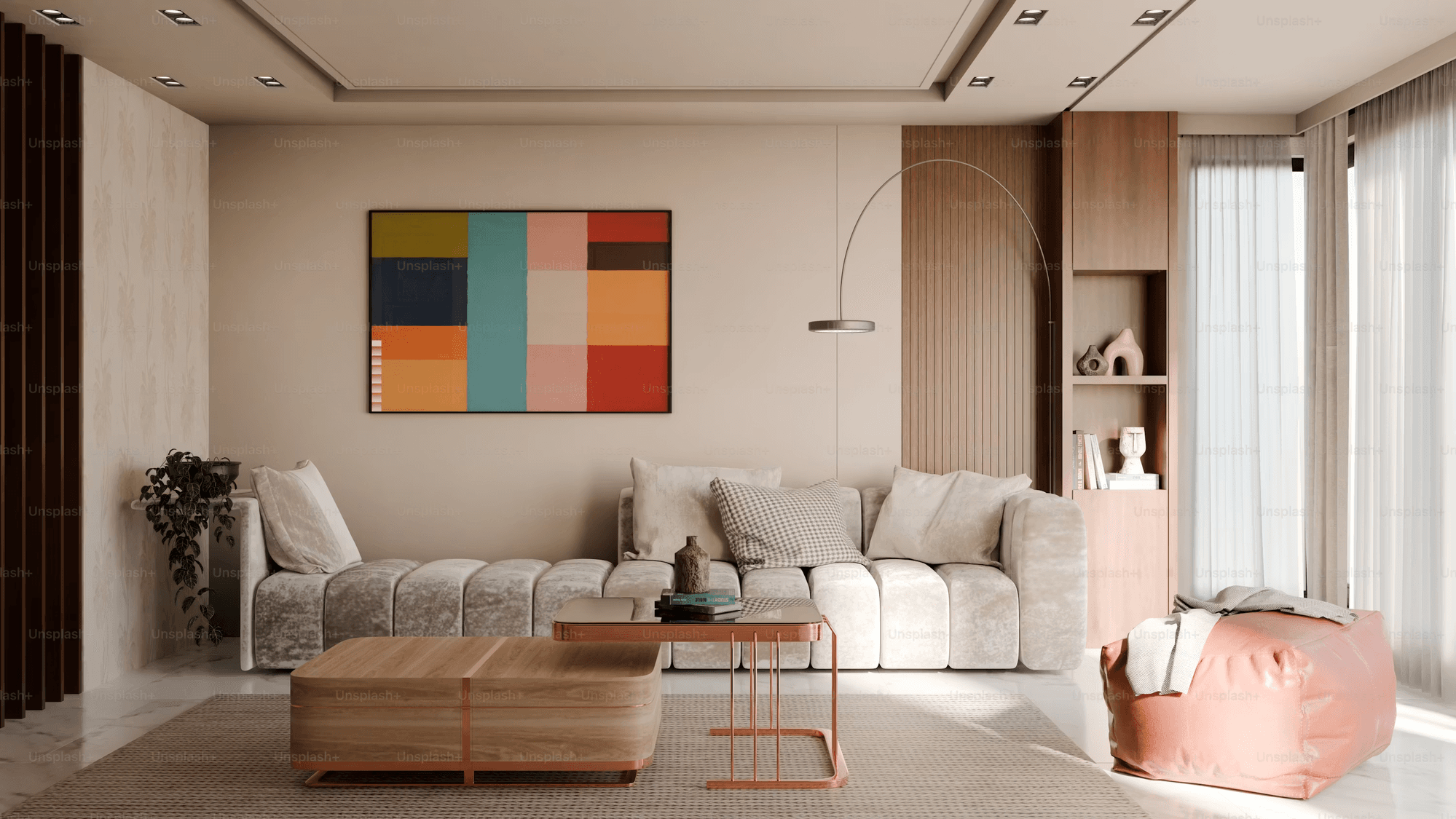
False Ceiling Designs That Elevate Your Living Room
Coved, coffered, layered, or backlit—false ceilings do far more than hide wires. Explore the designs that add drama and dimension overhead.
Why False Ceilings Transform a Space
A false ceiling — also called a dropped ceiling or secondary ceiling — is one of the most impactful design interventions available in interior design. It hides mechanical services (electrical wiring, air conditioning ducts, pipes), enables lighting integration, defines zones within open-plan spaces, and dramatically changes the perceived proportions of a room.
In Ahmedabad homes, false ceilings have become standard in living rooms, master bedrooms, and dining areas. The question is not whether to install one but which design and material to choose.
Gypsum Board: The Versatile Workhorse
Gypsum board (also called drywall or plasterboard) is the most common false ceiling material in Indian homes, and for good reason. It is lightweight, fire-resistant, easy to cut into complex shapes, and takes paint uniformly. It can be formed into flat ceilings, coved profiles, tray designs, coffered grids, and highly complex curved forms.
The key limitation is moisture sensitivity — gypsum is unsuitable for bathrooms, external-facing areas, or rooms with high humidity without specialist moisture-resistant grades. Cost is moderate, making it accessible for most budgets.
POP (Plaster of Paris): Traditional Versatility
POP has been the traditional false ceiling material in Indian homes for decades. Applied wet over a metal frame, it allows highly intricate cornices, medallions, and decorative mouldings that are difficult to achieve with gypsum board. A skilled POP craftsman can create extraordinarily detailed designs.
The drawbacks are weight, longer curing time, and the skill-dependence of the finish quality. In recent years, many designers have moved to gypsum for speed and consistency, reserving POP for specific decorative elements within a primarily gypsum ceiling.
Wood and Timber Ceilings
Timber false ceilings — whether solid wood planks, veneer panels, or WPC (wood-plastic composite) battens — introduce warmth and texture that painted gypsum cannot achieve. They are particularly effective in dining areas, master bedrooms, and home offices. WPC battens are the preferred specification in Ahmedabad's climate due to superior moisture and termite resistance compared to natural timber.
Stretch Ceilings: The Premium Option
PVC stretch ceilings consist of a tensioned membrane stretched between a perimeter track. They achieve a perfectly flat, jointless surface that can incorporate backlit panels, creating a luminous ceiling effect that photographs beautifully and creates genuinely dramatic spatial experiences. They are more expensive than gypsum alternatives but offer a level of finish precision and lighting integration that justifies the premium in high-specification projects.
Cost Comparison and Maintenance
As a rough guide: POP false ceiling costs ₹80–120 per sqft (material and labour), gypsum board ₹120–180 per sqft, WPC timber batten ₹200–350 per sqft, and stretch ceiling ₹400–700 per sqft. Maintenance requirements are minimal for all types if installed correctly — occasional repainting every 5–7 years for gypsum/POP, and simple cleaning for timber and stretch systems.
Ready to Transform Your Space?
Get a Free Consultation
Talk to our design team about your project — no obligation, no cost.
Book Consultation

